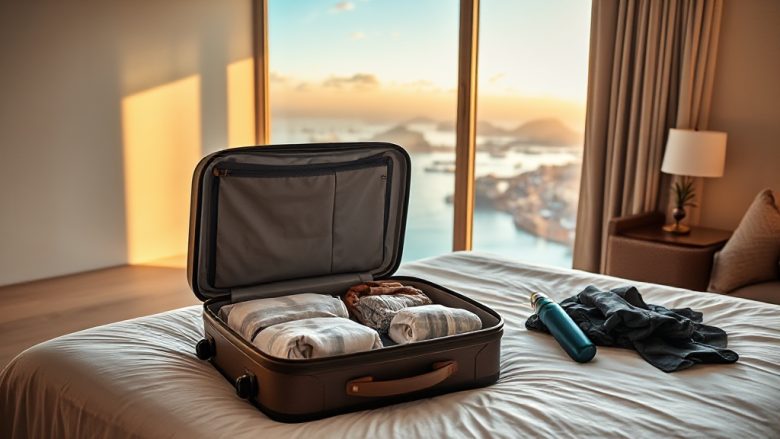
Travel packing trends to watch in 2026 are not guesses about some distant future. They are directions already visible in airline rules, luggage design and traveller behaviour. If you fly, take trains or drive long distances, the way you pack this year is quietly shifting. Airlines are tightening cabin allowances. Luggage makers are rethinking materials. Travellers are moving away from the buy-everything approach and toward a smaller, smarter kit. This article walks through the shifts worth knowing, why they are happening now, and what each one means for an ordinary trip.
Why Packing Is Changing Right Now
Three forces are pushing packing in a new direction. First, cabin bag rules have become more varied and more strictly enforced. Several carriers now weigh cabin bags at the gate, not just at check-in. That single change makes a light bag more valuable than a clever one. Second, the cost of checking a bag has risen faster than the cost of the flight in some cases, so more people are trying to travel with cabin luggage only. Third, gear has improved. Fabrics are lighter, chargers are smaller, and bags are built with compartments that actually match how people move through an airport.
None of this is dramatic on its own. Together, though, it changes what a sensible packing list looks like. The old advice was to pack for every possibility. The new advice is to pack for the trip you are actually taking, and to leave room for the fact that plans change.
Carry-On Only Becomes the Default, Not the Goal
For years, travelling with only a carry-on was a badge of honour for frequent flyers. In 2026 it is becoming the normal way to travel for a much wider group. The reason is simple economics. Checked bag fees have crept up, and the time saved by skipping the baggage carousel is real. When a short trip is involved, the maths usually favours cabin luggage.
What this means for you is that your bag needs to earn its place. A cabin bag that is slightly too big, or that has a rigid frame, can fail a sizer at the gate. Soft-sided bags with compression straps tend to fare better because they can be squeezed. If you are buying a new bag this year, check the exact dimensions your main airline allows, not the dimensions the shop advertises. Those numbers are often different.
There is a practical knock-on effect too. When everyone packs cabin-only, overhead space fills faster. Boarding earlier, or choosing a seat near the front, starts to matter more than it used to. Packing light is no longer just about your back. It is about getting your bag into the bin before the bins are full.
Smarter Fabrics and Lighter Kit
The materials story is the quietest trend on this list, and possibly the most useful. Clothing brands have spent the last few years refining fabrics that resist wrinkles, dry quickly and weigh very little. Merino wool blends, technical linens and recycled synthetics are now common at mid-range prices, not just at the top end. A shirt that dries overnight means you can pack three instead of six.
Luggage has followed the same path. Newer bags use lighter shell materials and thinner but stronger zips. Some use recycled plastics that hold up well in cold weather. The benefit is not just weight. A lighter bag is easier to lift into an overhead bin, which matters on a full flight when you are doing it one-handed.
For an ordinary traveller, the takeaway is to stop packing for the worst-case laundry scenario. If your clothes dry fast, you can wash a couple of items in a sink and stretch a week-long trip out of a smaller bag. That is a real change from the old approach of packing a fresh outfit for every day.
Compression and Cubes Get More Precise
Packing cubes are not new. What is new is how specific they have become. Instead of a generic set of three, you can now find cubes sized to a particular bag, with one-way valves for compression, and with mesh panels that let you see what is inside without opening everything. Compression bags that squeeze the air out of bulky items have also improved. They no longer require a vacuum, and they hold their seal better than the early versions.
The result is that a cabin bag can hold noticeably more than it could a few years ago, without looking overstuffed. The catch is that compression has limits. Squeezing a down jacket is fine. Squeezing a structured blazer is not, because it will crease. The skill is knowing which items to compress and which to fold flat against the back of the bag.
One short list of things worth compressing: puffer layers, fleece, spare socks, underwear, and anything made of soft knit fabric. Leave structured items and anything with a collar to be folded on top.
Tech That Packs Smaller and Charges Faster
Travel tech has been shrinking for a decade, but 2026 brings a useful step. GaN chargers, which use a more efficient semiconductor, are now small enough that a single plug can power a laptop, a phone and a camera without a bag full of bricks. Some models fold flat and weigh less than a paperback. That frees up real space and, more importantly, real weight.
Power banks have also become more capable, though airline rules around them have tightened. Many carriers now limit power banks to cabin baggage only and cap the watt-hour rating. The exact limits vary by airline and by country, so it pays to check before you fly. A power bank that was fine last year may not be accepted this year.
The practical upshot is to consolidate. One good charger and one good power bank will usually beat a tangle of cables and adapters. A small pouch for cables keeps them from spreading through the bag, and a short multi-tip cable can replace two or three separate leads.
Sustainability Moves From Marketing to Packing List
Sustainable travel gear has been talked about for years, often vaguely. In 2026 it shows up in more concrete ways. Reusable water bottles with built-in filters are common at airports that have refill stations. Solid toiletries, such as shampoo bars and toothpaste tablets, avoid the liquid rules entirely and cut down on plastic. Reusable cutlery sets are small enough to live in a side pocket.
There is a practical angle here, not just an ethical one. Solid toiletries do not leak. A shampoo bar cannot explode inside your bag and ruin your clothes. A refillable bottle saves money on airport water. These choices are spreading because they solve a real problem, not because they sound good in a brochure.
That said, do not overdo it. A packing list full of specialist eco items can end up heavier and more expensive than a simple one. The useful rule is to replace things you already carry with a reusable version, rather than buying a whole new kit.
What Probably Will Not Change
For all the movement, some things stay put. You will still forget something. You will still be tempted to pack the shoes you never wear. The basic logic of packing, which is to carry less and choose items that do more than one job, has not changed and probably will not. Layers still beat single heavy garments. A neutral colour palette still makes fewer clothes look like more outfits. A small laundry kit still saves space on longer trips.
What may change is the confidence with which people pack light. As cabin rules tighten and gear improves, travelling with one bag stops feeling like a stunt and starts feeling like the sensible default. That is the real trend underneath all the others. The tools are getting better, the rules are getting stricter, and the result is that more people are packing less, more deliberately, and with less stress at the gate.
Frequently Asked Questions About Travel Packing in 2026
Is carry-on only still realistic for a two-week trip?
Yes, if you are willing to do a little laundry. Fast-drying fabrics and solid toiletries make it easier than it used to be. The key is to pack for four or five days and wash as you go, rather than packing fourteen separate outfits.
Do compression bags damage clothes?
They can crease structured items, so keep those out. Soft knits, fleece and puffer layers handle compression well. If you are worried about a particular garment, fold it flat against the back of the bag instead.
Are power banks still allowed in cabin bags?
In most cases yes, but rules have tightened. Many airlines now restrict them to cabin baggage and set a watt-hour limit. Check your airline’s current policy before you travel, because the limits differ and are enforced at security.
What is the single most useful packing change to make this year?
Weigh your bag before you leave home. A cheap luggage scale costs very little and prevents the most common and most avoidable problem at the check-in desk or gate.