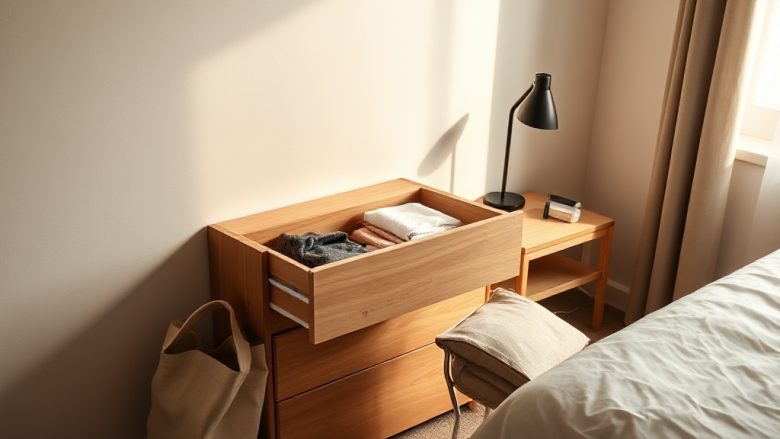
Most minimalist living advice fails for one simple reason. It starts with a whole-room purge. You watch one video, get fired up, drag everything out of the bedroom, and end up sitting on the floor at midnight surrounded by piles of clothes, feeling worse than before. That’s not a character flaw. It’s a bad starting point. If you’re looking for minimalist living tips for beginners that actually stick, begin much smaller. Pick one drawer. Tip it out. Then follow a single rule: anything that goes back in has to earn its place. That’s it. That’s the whole first step.
What follows is a checklist built around that idea. Every item is small, reversible, and ordered by how little it disrupts your normal day. You don’t need to buy storage boxes, read a philosophy book, or tell anyone you’re doing this. You just work down the list at whatever pace suits you. Some items take five minutes. A few take an afternoon. None of them require you to throw away anything you’ll genuinely miss.
Minimalist Living Tips for Beginners: Start With the Smallest Changes
These first items are deliberately tiny. The goal isn’t a transformed home. It’s proving to yourself that the process feels good rather than scary. Do these in order, and don’t rush ahead.
1. Empty one drawer and put back only what you used this month. A kitchen drawer, a bedside drawer, a bathroom drawer. Anything you haven’t touched in a month goes into a bag, not the bin. Leave the bag somewhere out of sight for a few weeks. If you don’t go looking for anything in it, you’ve learned something useful without committing to anything permanent.
2. Apply the same rule to your bedside table. Most bedside tables collect three things: a lamp, a phone charger, and a growing stack of stuff that has no other home. Clear the stack. Decide where each item actually belongs, or accept that it belongs nowhere and let it go.
3. Choose one flat surface and keep it permanently clear. A kitchen counter, a hallway shelf, a corner of your desk. Just one. Flat surfaces attract clutter like nothing else, and keeping a single one empty gives you a visible reminder of what you’re aiming for. It also gives you somewhere calm to look when the rest of the room is mid-sort.
4. Do a five-minute phone clean-up. Delete the apps you opened once and forgot. Turn off notifications for anything that isn’t a message from a real person. Digital clutter is easier to deal with than physical clutter because there’s no sentimental attachment, and the payoff is immediate. Your phone gets quieter within a day.
5. Stop buying duplicates. Before you buy another pair of scissors, another phone cable, another bottle of the shampoo you already have two of, check what you own. This isn’t really a decluttering tip. It’s a prevention tip, and it costs you nothing to start today.
If you only do these five, you’ll already notice a difference. The drawer opens more easily. The bedside table looks deliberate. The phone buzzes less. That’s the point of starting small: the results arrive before the effort has a chance to feel like a chore.
What to Skip When You’re Just Getting Started
This part matters as much as the checklist itself. A lot of beginner-friendly minimalism content pushes people toward decisions that are too big, too fast, and too emotional. Skip these at the start.
Don’t touch sentimental items yet. Photos, letters, childhood toys, gifts from people you love. These are the hardest categories to sort, and they’re the ones most likely to derail you. Leave them for month six, or year two. There is no prize for getting to them early.
Don’t attempt a whole-room purge. It sounds satisfying, and occasionally it works, but for most beginners it creates a mess that takes days to resolve. A room-sized project needs a room-sized block of time, and if you don’t have that block, you’ll end up living in the aftermath for a week.
Don’t buy storage containers before you’ve decluttered. This is the classic trap. You buy matching boxes, then realise you don’t need half of them, and now you own a stack of empty boxes that are themselves clutter. Sort first. Buy containers only if you still need them afterward, and only enough to fit what’s left.
Don’t set a number. You’ll see advice like “own 100 things” or “keep only 30 items of clothing.” Those numbers work for some people and are actively unhelpful for others. A number is a target, and targets invite guilt. Aim for a direction instead: less than before, and enough for your actual life.
Don’t announce it. Telling everyone you’re becoming a minimalist invites opinions, questions, and the mild pressure of having to look like one. Keep it private until it’s normal to you. By then, you won’t need to explain it.
Finally, don’t throw things away in a panic. If you’re unsure about an item, put it in a box with a date on it. If you haven’t opened the box in three months, you can let it go with confidence. If you have, you’ve saved yourself a replacement purchase. Either way, you win.
Next Steps Once the Small Changes Feel Normal
After a few weeks, the small stuff starts to feel automatic. You stop putting things down on the cleared counter. You check before you buy. You notice when a drawer is getting full. That’s when you can step up to slightly bigger projects, in roughly this order.
6. Sort your wardrobe by what you actually wear. Not by season, not by category. Just pull out everything you’ve worn in the last two weeks and put it to one side. Look at what’s left. That’s your real wardrobe, and the rest is a conversation you can have with yourself over a couple of evenings. Be honest but not ruthless. If a jacket is genuinely useful twice a year, it stays.
7. Deal with paper. Old bank statements, manuals for appliances you no longer own, takeaway menus from restaurants that closed years ago. Paper is one of the easiest categories to clear because almost none of it is emotionally loaded. Keep the documents you’re legally required to keep, scan anything you might need, and recycle the rest.
8. Clear one cupboard or shelf per week. Not per day. Per week. This pace is slow enough that you’ll never feel overwhelmed and steady enough that you’ll see real progress within a month. Pick the cupboard you open least often first, so the disruption is minimal.
9. Create a home for everything that stays. This is the step most people skip, and it’s the one that makes minimalism last. If an item doesn’t have a place, it will drift back onto your cleared surfaces within a fortnight. Give the things you’re keeping a specific spot, and the tidiness maintains itself.
10. Set a one-in, one-out rule for categories that fill up. Books, shoes, mugs, kitchen gadgets. When something new comes in, something old goes out. You don’t have to apply this everywhere. Just apply it where clutter tends to accumulate fastest, and you’ll stop the problem from returning.
None of these steps require special equipment, a bigger home, or a personality change. They require a bit of attention and the willingness to make small decisions rather than dramatic ones. That’s the honest version of minimalist living for beginners, and it works precisely because it doesn’t ask much of you at any single moment.
If you take one thing from this checklist, take the drawer. One drawer, one rule, one bag set aside for a few weeks. Everything else on this list is just the same idea applied a little more widely. The people who stick with minimalism aren’t the ones who cleared their whole house in a weekend. They’re the ones who started with something so small it didn’t feel like a risk, and then kept going because it quietly made their days easier. Start there. The rest can wait.